

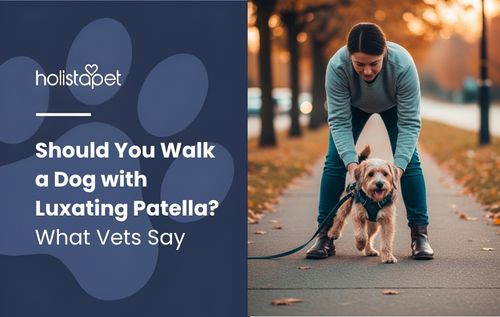
A dog with a luxating patella can still go on walks, but the approach must stay controlled and careful. When the kneecap slips out of its normal position, the knee joint becomes unstable.
The right kind of leash walking supports joint health and keeps dogs active, while the wrong approach can trigger pain or further injury. Understanding how to walk a dog with luxating patella helps protect the joint and maintain a good quality of life and is just one part of broader dog care support.

What is a Luxating Patella?
A luxating patella occurs when the kneecap slips out of its normal position in the knee joint. This condition, also called patellar luxation, disrupts how the thigh bone and shin bone align during movement. It often affects small and toy breeds, though large breed dogs can develop it as well.
In dogs with luxating patella, the ligament called the patellar ligament fails to keep the kneecap stable, which can lead to difficulty walking, joint damage, and long term issues with joint health.
Do Luxating Patellas Have Different Stages?
Yes, luxating patella in dogs has different stages that describe how often the kneecap dislocates and how severe the condition becomes.
- Grade I: Kneecap slips occasionally but returns to its normal position on its own.
- Grade II: Kneecap dislocates more often and may stay out until the dog adjusts it.
- Grade III: Kneecap stays out most of the time but can still move back into place manually.
- Grade IV: Kneecap remains permanently displaced and cannot return to its normal position.
What are the Symptoms of Luxating Patella in Dogs?
Dogs with luxating patella show clear movement changes and signs of discomfort as the kneecap slips out of place.
- Skipping or hopping gait: Dog lifts one leg for a few steps, then walks normally again.
- Difficulty walking: Struggles during normal activities or slows down.
- Limping: Favors one leg or shifts weight to three legs.
- Kneecap dislocates: Knee pops in and out during movement.
- Stiffness: Reduced flexibility in the knee joint after rest.
- Pain or discomfort: Dog shows signs like whining or avoiding touch.
- Reduced activity: Less interest in play or exercise.
- Abnormal posture: Legs appear misaligned due to joint instability.
What Causes Canine Luxating Patella?
Several factors cause luxating patella in dogs, often linked to structure, genetics, and joint stress.
- Genetic predisposition: Common in small and toy breeds with inherited joint structure issues.
- Abnormal bone alignment: Thigh bone and shin bone develop in a way that pulls the kneecap out of place.
- Weak thigh muscles: Poor muscle support allows the kneecap to slip more easily.
- Shallow groove in the knee joint: The patella lacks a stable track to stay in its normal position.
- Injury or trauma: Sudden impact can damage the patellar ligament and cause patella luxation.
- Excess weight: Extra load puts unnecessary pressure on the dog's joints and worsens instability.
Should You Walk a Dog with Luxating Patella?
Yes, a dog with luxating patella can walk, but only with controlled and low impact routines that protect the knee joint.
When done correctly, walking offers several key benefits that help manage the dog’s condition and support long-term joint health.
Supports Joint Stability
Controlled leash walking supports stable knee movement and helps reduce stiffness over time.
The American College of Veterinary Surgeons notes that consistent, moderate activity helps preserve joint function in dogs with patellar luxation.
Maintains Muscle Strength
Regular movement strengthens the thigh muscles that support the patellar ligament. Strong muscles reduce how often the kneecap slips. This muscle support plays a key role in keeping dogs active without placing unnecessary pressure on the joint.
Prevents Excess Weight
Walking helps manage body weight and reduces strain on the joints. Extra weight increases the risk of joint damage and can worsen luxating patella in dogs alongside weight management, a dog essential vitamins supplement may help support overall condition.
Keeping a healthy weight supports long-term joint health and reduces stress on the knee.
Improves Mental Stimulation
Daily walks give mental stimulation that keeps a dog engaged and calm. Limited activity can lead to frustration, especially in dogs that stay indoors. Controlled walks allow a furry friend to stay mentally sharp while protecting physical health.
Encourages Safe Activity
Low impact exercise like slow walks allows dogs to stay active without risking further injury.
Research published in veterinary rehabilitation studies shows that controlled exercise supports recovery and improves a dog's condition without triggering chronic pain; pairing this with probiotic chews for dogs may further support digestive and overall wellness during recovery.
How Do I Know If It's Safe to Walk Dogs with Luxating Patellas?
Dogs with luxating patella can walk safely, but only when specific signs show that the knee joint can handle controlled movement.
|
Condition Factor |
Safe to Walk? |
What to Look For |
Action to Take |
|
Mild cases (Grade I to II) |
Yes |
Occasional kneecap slips, no constant pain |
Short, controlled walks with leash walking |
|
Severe cases (Grade III to IV) |
Limited |
Kneecap dislocates often or stays out |
Only walk under vet’s guidance |
|
Pain levels |
Depends |
Dog shows signs like limping or whining |
Stop immediately to avoid further injury |
|
Mobility |
Yes if stable |
Dog can bear weight on one leg or switch to three legs briefly |
Continue slow walks and monitor dog’s progress |
|
Post injury or complications |
No |
Torn cruciate ligaments or swelling present |
Rest and follow a treatment plan |
|
After diagnosis |
Case by case |
Early diagnosis with mild symptoms |
Start low impact exercise and physical therapy |
|
Weight condition |
Yes if managed |
Healthy weight reduces stress on joints |
Maintain controlled exercise and diet |
|
Vet evaluation |
Required |
Advanced imaging confirms joint damage level |
Follow recommendations for surgical intervention or recovery |
CBD is sometimes used to support dogs with joint discomfort, including conditions like luxating patella. A Cornell University study in 2018 observed an association between CBD use and improved comfort in some dogs with joint discomfort, a finding also referenced by the AKC: CBD Oil for Dogs — What You Need to Know and supported by PubMed: Pharmacokinetics, Safety, and Clinical Efficacy of CBD in Dogs.These findings suggest CBD may play a supportive role in overall comfort, but results can vary depending on the individual dog and condition severity.
A full-spectrum alternative for dogs or a dog CBD treat collection are sometimes used to support general joint comfort in dogs with mobility concerns. These products may support joint comfort and mobility when used alongside controlled exercise and veterinary guidance.

When to Know If Walking is Not Helping?
Walking is not beneficial when it leads to increased discomfort or worsening mobility in the dog.
- Increased limping: Dog relies more on one leg or avoids using the affected limb.
- Frequent kneecap dislocates: Kneecap slips more often during or after walks.
- Signs of pain: Whining, stiffness, or reluctance to move after activity.
- Reduced mobility: Difficulty walking or refusal to continue even during slow walks.
- Swelling in the knee joint: Visible inflammation after controlled exercise.
- Loss of progress: Dog’s progress declines instead of improving over time.
- Avoidance behavior: Dog resists leash walking or normal activities.
- Signs of further injury: Sudden worsening may indicate joint damage or torn cruciate ligaments.
When Do I Visit the Vet If I Want My Dog to Start Walking?
Visit the vet before starting a walking routine if a dog with luxating patella shows pain, difficulty walking, or frequent kneecap dislocation — pet owners unsure where to start can also learn how to get free vet advice online. A vet can assess the knee joint, check for joint damage, and confirm the severity through physical exams or advanced imaging.
This step helps determine if the dog can handle controlled walks or if it may require surgical intervention, physical therapy, or a structured treatment plan first.
Moderate Exercise Helps with Luxating Patella
Moderate, controlled exercise helps a dog with luxating patella stay active, maintain muscle strength, and support joint health. With proper care and vet’s guidance, walking can improve comfort and protect long-term mobility.
Read Next: Can I Talk to a Vet Online for Free? Free Vet Chat Options
Frequently Asked Questions
Can a dog with luxating patella run or play normally?
No. High impact activity can strain the knee joint and worsen patella luxation. Gentle play keeps dogs active without placing stress on the patellar ligament or causing the kneecap to slip.
Do all dogs with luxating patella need surgery?
No. Mild cases respond well to conservative care. Pet owners can manage the dog’s condition with weight control, joint supplements, and muscle strengthening, while severe cases may require surgical correction.
Can luxating patella heal on its own?
No. The condition does not reverse naturally. Management focuses on improving joint health, stabilizing the kneecap, and preventing further injury through controlled exercise and care.
Are certain breeds more prone to patellar luxation?
Yes. Small and toy breeds face a higher risk due to genetic predisposition. Some large breed dogs also develop the condition, especially when joint alignment issues affect the thigh bone and shin bone.
Can diet affect a dog’s joint health?
Yes. Proper nutrition supports joint cartilage and helps maintain a healthy weight. This reduces excess weight that puts unnecessary pressure on the dog’s joints.
How long should walks last for dogs with this condition?
Short walks work best. Slow walks with controlled exercise help maintain muscle mass and support joint health without overloading the knee joint.






Leave a comment
All comments are moderated before being published.
This site is protected by hCaptcha and the hCaptcha Privacy Policy and Terms of Service apply.